Munich like a local
06/26/2025
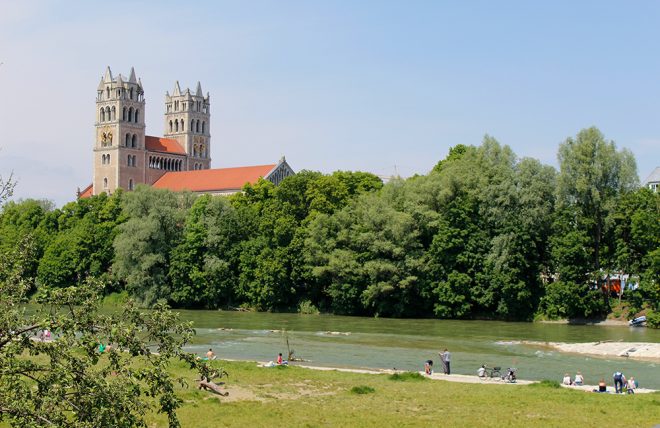
Munich pulls in over 9 million overnight visitors a year — Germany’s second most-visited city — yet the neighborhoods most residents spend their weekends in appear on almost none of those itineraries. The gap between tourist Munich and local Munich is wider than most people expect when they book the trip.
The Hofbräuhaus is not where anyone from Munich goes on a Friday night. The Glockenspiel at Marienplatz chimes twice daily, and locals have collectively stopped caring. And Augustiner beer — not the Hofbräu brand on every souvenir stein — is what you’ll find in most glasses around the city at 7 PM.
What follows is not a comprehensive city guide. It’s the five things that typically separate someone who has navigated Munich as a resident from someone who visited and ticked off the standard list.
Note: Local transport pricing, market schedules, and opening hours change periodically. Verify current details at mvv-muenchen.de or through official Munich Tourism sources before your trip.
The Beer Garden Hierarchy Munich Locals Actually Follow
Bavaria has more licensed beer gardens per capita than any other German state. Munich alone operates roughly 35 within city limits. But not all of them carry the same weight among residents — the tourist-facing ones function more as entertainment venues than genuine beer gardens. Locals typically follow a different map.
Augustiner-Keller on Arnulfstrasse is consistently cited as the most genuinely local of the accessible central beer gardens. It seats around 5,000, pours Augustiner Edelstoff as the house beer, and draws a crowd that skews heavily toward Munich residents rather than first-time visitors. Tables fill quickly on summer evenings — arriving by 6 PM is the standard approach if you want a spot without negotiating.
The Hirschgarten in the Nymphenburg district holds the record as the largest beer garden in the world at approximately 8,000 seats. Families with children dominate Sunday afternoons. It’s genuinely local in character, well removed from the tourist center, and largely ignored by guidebooks — which is exactly what makes it worth knowing.
The Flaucher, along the Isar River in Thalkirchen, is the one Münchners typically bring visitors they actually want to impress. It’s seasonal, sits on a gravel bank next to the river, and in summer borders one of the best urban river beaches in Europe. No beer garden in the city has a better warm-weather setting.
| Beer Garden | Location | Capacity | Local Score | Best For |
|---|---|---|---|---|
| Augustiner-Keller | Arnulfstrasse (near Hauptbahnhof) | 5,000 seats | ★★★★★ | Weeknight drinks with residents |
| Hirschgarten | Nymphenburg | 8,000 seats | ★★★★☆ | Sunday family afternoons |
| Flaucher | Thalkirchen (Isar riverbank) | ~2,000 seats | ★★★★★ | Summer evenings, river atmosphere |
| Seehaus | Englischer Garten (north end) | 2,500 seats | ★★★☆☆ | Post-jog in the park |
| Chinesischer Turm | Englischer Garten (central) | 7,000 seats | ★★☆☆☆ | Tourist-heavy; avoid peak summer |
| Hofbräuhaus | Altstadt (Old Town) | 3,500 indoor | ★☆☆☆☆ | Once, as a cultural experiment |
One rule applies across all Munich beer gardens: bringing your own food is not only allowed but expected. Locals routinely carry bread, Obatzda (Bavarian cheese spread), radishes, and cold cuts to any beer garden. You’re only required to purchase drinks from the venue itself — the food is entirely self-sourced or purchased at the garden’s own food counter. Paying €14 for a mediocre Brotzeit at a tourist garden when Viktualienmarkt is 20 minutes away by foot is one of the more reliably avoidable Munich mistakes.
The Two Neighborhoods Worth More Than a Walk-Through
Standard Munich itineraries include Maxvorstadt for museums and Schwabing for its historical bohemian reputation. Both are fine. Neither is where a 30-year-old Munich resident spends their Saturday afternoon.
The Glockenbachviertel — shortened to “Glockenbach” in everyday conversation — is the clearest window into what Munich looks like when it’s not performing for visitors. Roughly bounded by Sendlinger-Tor-Platz to the north and the Isar to the east, the neighborhood runs dense with independent coffee shops, natural wine bars, second-hand bookstores, and restaurants that don’t carry English menus because they don’t expect to need them. The Sunday flea market at Flohmarkt Sendlinger Tor draws local antique hunters from 7 AM and operates in an entirely different register from the tourist-oriented market at Marienplatz.
Specific places worth knowing in Glockenbach: Café Kosmos on Hans-Sachs-Strasse for weekend brunch (expect a queue after 10 AM on Sundays), and the cluster of small natural wine bars along Müllerstrasse that have opened in recent years. Glockenbach is also Munich’s primary LGBTQ+ neighborhood, which makes the social atmosphere noticeably more relaxed than the city’s otherwise fairly conservative public character. This is Munich without the Lederhosen performance.
Au-Haidhausen, across the Isar to the east, offers a different register entirely. More residential — quieter, less visibly hip, more families and long-term residents than the Glockenbach café crowd. The French Quarter (Franzosenviertel) inside Haidhausen has streets named after French cities, rows of 19th-century townhouses, and essentially no tourists on a Tuesday morning. Wiener Markt in Haidhausen runs Wednesday and Saturday mornings with vegetable vendors who are not there for the photograph opportunity.
Both neighborhoods are bikeable from the city center in under 15 minutes. Munich’s cycling infrastructure is genuinely strong — the MVG Rad bike-share system charges roughly €1 per 20 minutes, with a €55 monthly pass for longer stays. For a day visit, Radius Bikes near the Hauptbahnhof rents standard city bikes for approximately €14-18 per day. This is the most practical way to move between both neighborhoods without depending on the U-Bahn schedule.
Clear verdict: Glockenbach for evening energy and independent restaurants. Au-Haidhausen for a slower, more residential Saturday morning. Both outperform the Marienplatz area for anything that doesn’t involve a specific museum entry ticket.
Where Munich Residents Actually Eat (With Real Prices)
The tourist eating circuit — restaurants with photos of dishes on the menu, anything within 200 meters of Marienplatz — is entirely skippable. Here’s where locals typically eat instead.
- Leberkäse sandwiches at Viktualienmarkt butcher stands — The market itself is tourist-adjacent, but the butcher counters selling warm Leberkäse (Bavarian meatloaf) sandwiches for €3-4 each are genuinely local staples. Metzgerei Winklmayr is one of the better-established stands. A warm slice on a fresh roll with sweet mustard is Munich fast food in its actual everyday form — not the Instagram version.
- Rischart for breakfast — Café Rischart is a Munich institution with multiple city-center locations. Pretzels run €1.30-1.80, the Weisswürste are sold before noon (the significance of this timing is covered below), and coffee doesn’t cost €6 with a foam design. It’s not obscure. It’s simply where locals eat breakfast without theater or markup.
- Generic tip: use Mittagsmenü pricing — Most Munich restaurants offer lunch specials between 11:30 AM and 2 PM. A full meal with soup and main course typically runs €9-14 at places that charge €20+ per dish at dinner. This is how residents eat at sit-down restaurants daily without it becoming a financial event.
- Dallmayr for provisions — Alois Dallmayr on Dienerstrasse, operating since 1700, functions as both a gourmet grocery and a formal café. The upstairs restaurant is expensive (€18-25 per main course), but the ground-floor deli counter is where Munich residents have bought smoked fish, Bavarian cheeses, and specialty foods for generations. Worth navigating even without buying anything.
- Generic tip: skip the Englischer Garten food kiosks — The stands near Chinesischer Turm charge substantial premiums on everything. Anyone spending time in the park is better served carrying food from a nearby bakery. The REWE and Edeka supermarkets within ten minutes of any park entrance carry perfectly adequate picnic supplies at standard prices.
- Elisabethmarkt in Schwabing for Saturday morning shopping — Smaller than Viktualienmarkt, less photographed, and neighborhood-oriented in character. Local vegetable growers, a cheese stand, flowers, and a weekly flow of residents doing actual grocery runs. Combine it with a morning walk through Schwabing if you’re in that part of the city.
The Weisswurst Rule That Marks You Immediately
Weisswurst is a breakfast food, served before noon, and not eaten in the evening. The traditional rule holds that the pale veal sausage should be consumed before the noon church bells ring. Most traditional spots — including Café Rischart and the butcher stands at Viktualienmarkt — don’t sell them past midday. The correct pairing is sweet mustard, a soft pretzel, and a Weissbier, even at 9 AM, because Bavaria has its own relationship with morning beer. Ordering Weisswurst at dinner signals instantly that you haven’t done the research.
Getting Around Munich: Q&A on What Actually Saves You Money
Is the MVV day ticket worth buying?
The Munich MVV transport network covers U-Bahn, S-Bahn, trams, and buses under a single ticket system. A single-person day ticket for the inner zones costs €9.20 as of 2026. The Group Day Ticket covers up to 5 people for €18.50 total. For two people taking more than five trips in a day, the group ticket pays for itself. For solo travelers staying within one neighborhood and walking frequently, individual tickets at €3.70 each often make more economic sense. Courts have generally applied a similar cost-benefit logic to urban transit systems across Europe: group passes deliver value only when usage is frequent enough to justify the upfront cost.
S-Bahn or taxi from the airport — which is actually worth it?
The S1 and S8 lines connect Munich Airport to the city center in roughly 45 minutes for €13.60 one-way (or covered by a zone extension on an existing day pass). A taxi costs €70-90 and saves perhaps 20 minutes. The train is the correct choice for almost every traveler. A taxi makes economic sense only with very heavy luggage, arrivals after late-night service gaps, or a group of four splitting the cost — at which point the math shifts considerably.
Should I actually rent a bike for a day?
Yes — for at least one full day. Munich’s cycling infrastructure ranks among the strongest in Germany: protected lanes on most arterial streets, flat terrain across the city center, and both Glockenbachviertel and Au-Haidhausen are well-connected by bike path to each other and to the Isar riverbank trail. MVG Rad stations cover the city with dense coverage; Radius Bikes near the Hauptbahnhof handles day rentals and can suggest routes. Cycling along the Isar between Augustiner-Keller and Flaucher on a summer evening is, without significant qualification, the best way to move through Munich.
Do I need to rent a car?
No. A car actively complicates Munich. Central parking runs €3-5 per hour, many streets in Glockenbach and inner Schwabing carry resident-only restrictions, and the MVV covers every destination a visitor reasonably wants to reach. The only scenario where renting a car makes practical sense is day-tripping to rural Bavaria — the Starnberger See, Tegernsee, or the Alpine foothills — where train connections exist but aren’t flexible enough for open-ended exploration.
The 9 million people who visit Munich annually almost certainly don’t regret the trip. But the ones who skip the Glockenspiel countdown, find Flaucher by 6 PM on a warm evening, and eat a Leberkäse sandwich from a butcher counter for €3.50 — those are typically the ones who come back the following year without needing a guidebook.