Solo Travel in Barcelona: A Practical Neighborhood and Budget Guide
04/19/2026
The assumption that Barcelona rewards group travel more than solo travel gets tested within about 48 hours of arriving. Barcelona has more infrastructure for independent travelers than most cities its size: a legible metro grid, a hostel scene that actually functions as advertised, and a street layout — particularly in the Eixample district — that becomes intuitive faster than you’d expect. The problem isn’t the city. The problem is that most solo travel guides bury the decisions that actually matter under lists of cafés and so-called hidden gems.
This guide focuses on four decisions that first-time solo visitors consistently get wrong: where to sleep, how to stay safe, how to move around cheaply, and what to book before boarding the plane.
Where You Stay Determines Your Entire Experience
Make this decision before anything else. Barcelona’s neighborhoods are distinct enough that choosing wrong adds friction to every day — an extra metro transfer here, a 20-minute walk to the nearest good restaurant there. Here’s the honest breakdown:
| Neighborhood | Character | Dorm (per night) | Private Room | Metro Access |
|---|---|---|---|---|
| Gothic Quarter | Tourist-heavy, medieval streets, very central | €20–35 | €80–150 | Excellent (L3, L4) |
| El Born | Walkable, good restaurants, artsy, lower noise | €25–40 | €75–130 | Good (L4: Jaume I) |
| Eixample | Grid layout, safe, LGBTQ+ bar scene, well-lit | €28–40 | €80–140 | Excellent (multiple lines) |
| Gràcia | Local feel, hilly, quieter evenings, good food | €22–35 | €65–110 | Good (L3, FGC) |
| Poblenou | Emerging tech/art scene, beach access, cheaper | €20–30 | €60–100 | Good (L4: Llacuna) |
The practical shortlist for most first-time solo travelers is El Born or Eixample. El Born puts you within walking distance of the Gothic Quarter, the Picasso Museum, and Barceloneta beach — without the noise of sleeping inside the Gothic Quarter itself. Eixample’s grid (113-meter blocks with chamfered corners) makes it nearly impossible to lose your bearings after a day or two. It also hosts most of Barcelona’s LGBTQ+ venues in the Gayxample sub-area, which tends toward welcoming, active bars even on weeknights.
Generator Barcelona, located in Gràcia, is one of the most consistently reliable solo-traveler hostels in the city. Dorm beds run €25–35 per night depending on season, and the rooftop functions as a real social space rather than a design feature. Casa Gracia, on the Eixample-Gràcia border, starts from around €30 per night for dorms — less party-oriented, better if you want occasional social contact without committing to a party atmosphere.
Avoid booking directly on or adjacent to La Rambla. The street stays noisy until 3am, accommodation there costs more for lower quality, and it places you at the center of the pickpocket zone described below.
What “Central” Actually Means in Barcelona
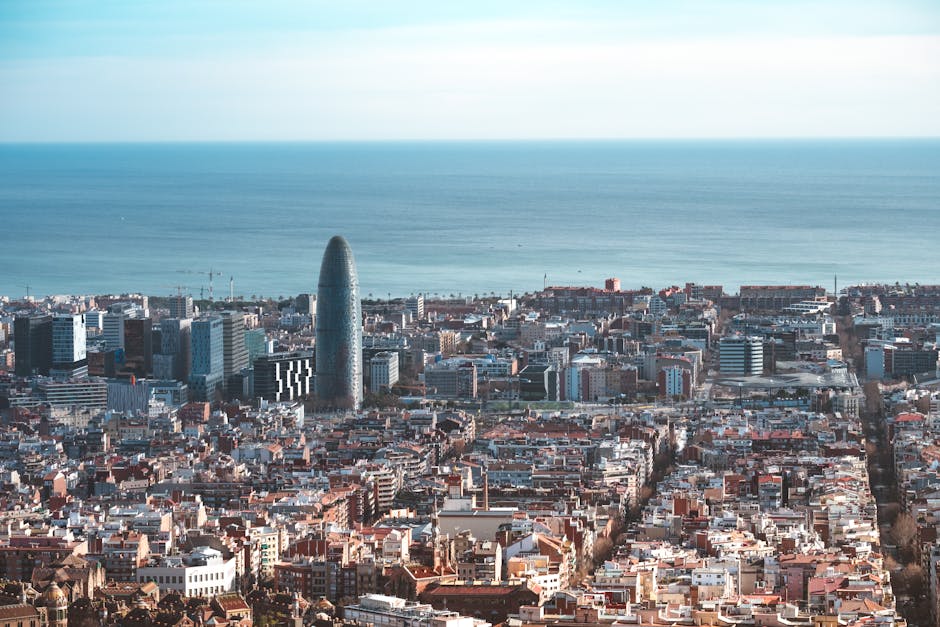
Barcelona’s metro coverage is strong enough that neighborhood centrality matters less than it does in cities with weaker transit. Poblenou — an up-and-coming area with a growing food scene — sits 10 minutes by metro from the city center. The real cost comes from staying uphill in Sarrià-Sant Gervasi, where fewer metro lines mean a transfer for nearly every central destination.
Accommodation Prices and Booking Windows
Hostel dorms in El Born and Eixample run €25–40 per night. Private rooms in those same areas: €70–120. Gothic Quarter prices run 15–20% higher for equivalent quality. In July and August, add €15–25 to every estimate. Book 4–6 weeks out for shoulder season; 8–10 weeks for summer if you want specific properties at reasonable rates.
The Pickpocket Risk Is Exactly What You’ve Heard — And Exactly Where
Keep your passport in your accommodation’s safe, don’t use your back pocket on La Rambla or in the Gothic Quarter, and carry a cross-body bag with the zip facing your body in those two areas. Outside them, Barcelona presents no unusual safety challenge for solo travelers. The threat is real but tightly concentrated — knowing the geography is most of the protection you need.
Five Steps to Moving Around Barcelona Without Overpaying
Transport is one of the easiest places to lose money in Barcelona. Here’s how not to.
- Buy a T-Casual card at any metro station. It gives you 10 trips across the metro, bus, tram, and FGC suburban rail for €11.35. A single metro journey without it costs €2.40. Take more than five trips in a day and the card has already paid for itself.
- Use the L4 yellow line as your primary reference. It connects Barceloneta beach, the Gothic Quarter (Jaume I stop), El Born, and the upper city. Learning this one line first makes the rest of the metro network legible faster.
- Download Citymapper alongside Google Maps. Citymapper provides more accurate real-time metro tracking for Barcelona and shows you which end of the platform to board from so you exit nearest your destination — useful when you’re carrying a bag and don’t want to walk the full length of a long underground corridor.
- Walk between El Born, the Gothic Quarter, and Barceloneta. These three areas are 15–20 minutes apart on foot. Using the metro between them wastes T-Casual trips and adds transfer time with no real gain.
- Take the Aerobús from El Prat Airport, not a taxi. The Aerobús runs every 5–10 minutes from Barcelona-El Prat to Plaça de Catalunya for €6.75 one-way (€10.45 return). Airport taxis cost €35–45. Unless you arrive after midnight with heavy luggage, there is no argument for the cab.
One addition: when the metro closes (around 00:15–05:00), the Nitbus network covers the city. Line N17 handles the most useful central routes. Your T-Casual card works on Nitbus — no separate ticket needed.
Getting Out of the City for a Day
Montserrat — the mountain monastery 50 minutes from Barcelona — earns a half-day trip. The R5 Ferrocarrils de la Generalitat (FGC) train from Plaça d’Espanya costs €7.50 each way. A combined ticket including the rack railway up the mountain runs €24.10 and is almost always worth buying. Go on a weekday; weekend crowds make the narrow mountain paths feel like queues.
Why You Must Book Sagrada Família and Park Güell Before You Land
The Sagrada Família receives over 4.5 million visitors annually — it is the most visited monument in Spain. In peak season (June through September), timed entry tickets sell out several days in advance. In shoulder season, they are gone by mid-morning. Showing up at the gate without a ticket works occasionally in January. It does not work from April through October.
Standard adult entry costs €26. Adding tower access raises the price to €36–38 depending on which tower you choose. The Nativity Tower (right side of the main façade) offers better views over the city skyline and books out faster than the Passion Tower. Book directly at the official Sagrada Família website — not through third-party resellers, which routinely charge €5–10 in markups and occasionally issue tickets with incorrect dates. The official site lets you pick your 30-minute entry window and add tower access in one clean transaction.
Minimum booking lead time: 3–4 weeks ahead in summer, 1–2 weeks in spring or fall. If your travel dates are confirmed, book both attractions immediately.
Park Güell: What Requires a Ticket and What Doesn’t
Most of Park Güell is free. The section that requires a €10 timed ticket is the Monumental Zone — the mosaic terrace, the Dragon Staircase, the Hypostyle Room, and the views that appear in every photograph of the park. Slots sell out 2–3 weeks ahead in summer; book through the official Park Güell website. If you miss a ticketed window, visit the free upper sections anyway. The paths above the Monumental Zone offer legitimate city views with almost none of the crowds below.
Other Attractions That Don’t Require Weeks of Planning
The Picasso Museum (€14, timed entry available within a few days online), MACBA contemporary art museum (€12), and the Palau de la Música Catalana (€22 for a guided tour, usually available with 2–3 days’ notice) all have more inventory. Camp Nou — FC Barcelona’s stadium tour — costs €28 and has good availability outside match days. The Bunkers del Carmel, a hilltop with 360-degree views over the city, is entirely free with no booking required and almost no queue outside weekend afternoons. Go at sunset.
The Mistake That Consistently Damages the Sagrada Família Visit
Going without context. Antoni Gaudí encoded specific theological and natural symbolism throughout the structure — in the column branching patterns, the nativity façade sculptures, the way afternoon light moves through calibrated stained glass. None of it announces itself. Download the official Sagrada Família app before you arrive. It includes a position-based audio guide that activates as you move through each section. Visitors who use it consistently report leaving with a fundamentally different experience than those who wander without it. The on-site guided tour (€24) covers similar ground, but the app is free and available in English.
What a Solo Week in Barcelona Actually Costs
Barcelona sits in the middle tier of European city costs — cheaper than Paris, Amsterdam, or Zurich; more expensive than Lisbon, Kraków, or Budapest. The breakdown below covers 7 nights at three real spending levels based on 2026 prices.
| Category | Budget Traveler | Mid-Range | Comfortable |
|---|---|---|---|
| Accommodation (per night) | €28 (hostel dorm) | €90 (private room) | €140 (3-star hotel) |
| Food (per day) | €20 (markets, budget cafes) | €45 (mix of sit-down and takeaway) | €70 (restaurants daily) |
| Transport (per day) | €5 (T-Casual card) | €8 | €15 (some taxis included) |
| Attractions (daily average) | €10 | €20 | €35 |
| Daily Total | €63 | €163 | €260 |
| 7-Night Total | €441 | €1,141 | €1,820 |
The single biggest lever is accommodation. The gap between a hostel dorm and a private room runs €50–80 per night. Over 7 nights, that’s €350–560 — roughly the cost of a round-trip flight to Barcelona from London, Amsterdam, or Berlin. Decide which matters more before booking either.
Eating lunch at the Mercat de la Boqueria is a tourist-tax experience — overpriced and crowded. Instead, look for a midday menú del día anywhere off La Rambla’s radius: two courses, bread, and a drink for €10–14. These are how locals eat on weekdays, and they’re available across most of the city, particularly in Sant Antoni along Carrer del Parlament.
Questions Solo Travelers Ask Before Going to Barcelona
Is Barcelona safe for solo female travelers?
Yes, with the same caveats that apply in any major European city. The pickpocket risk on La Rambla is gender-neutral. After midnight, the Gothic Quarter’s narrower side streets can feel isolated — the practical fix is to base evening activity in Eixample or Gràcia, where foot traffic stays dense and streets stay lit. The Eixample bar scene is consistently reported as accessible and welcoming for solo women, with enough people around at most hours that streets don’t empty out.
What’s the best time of year for a first solo visit?
May or September, without much debate. May brings 22–26°C temperatures, manageable crowds, and accommodation at roughly 70% of August prices. September is arguably the strongest month overall: the worst summer heat has broken, locals return from August holidays (which means more neighborhood restaurants are actually open rather than closed for vacation), and you’re past the main tourist surge. July and August work but mean 30°C+ heat, packed beaches, and maximum prices across every accommodation category.
How do you meet other travelers as a solo visitor?
Stay in a hostel with functioning common areas. Generator Barcelona and Casa Gracia both have these. Free walking tours — Sandeman’s New Europe and Runner Bean Tours both run tip-based tours departing from Plaça de Catalunya — put you alongside other solo travelers at a natural social starting point with no commitment beyond the time. For longer evenings, the bar strip along Carrer del Consell de Cent in Eixample draws an international, English-speaking crowd on weekend evenings and is easy to navigate alone.
Do you need Spanish or Catalan?
No. English is widely spoken in tourist-facing contexts across the city: accommodation, restaurants, paid attractions, and public transport. Spanish works universally if you have any. Catalan is the official language and locals appreciate even basic phrases — gràcies (thank you) and bon dia (good morning) go a long way as gestures without requiring fluency. In practice, solo travelers encounter almost no language friction in Barcelona.
The assumption that Barcelona is a city best experienced with company was wrong from the start. Its grid makes navigation intuitive. Its hostel infrastructure makes meeting people straightforward when you want it and easy to avoid when you don’t. Its transit system makes independent movement cheap and reliable. By the time you’re watching the city spread out from the Bunkers del Carmel at sunset, entirely alone and entirely oriented, the original hesitation stops making any sense at all.