Bangkok Street Food Markets First-Timer: Bangkok Street Food Markets: Read This Before Your First Bite
09/18/2026
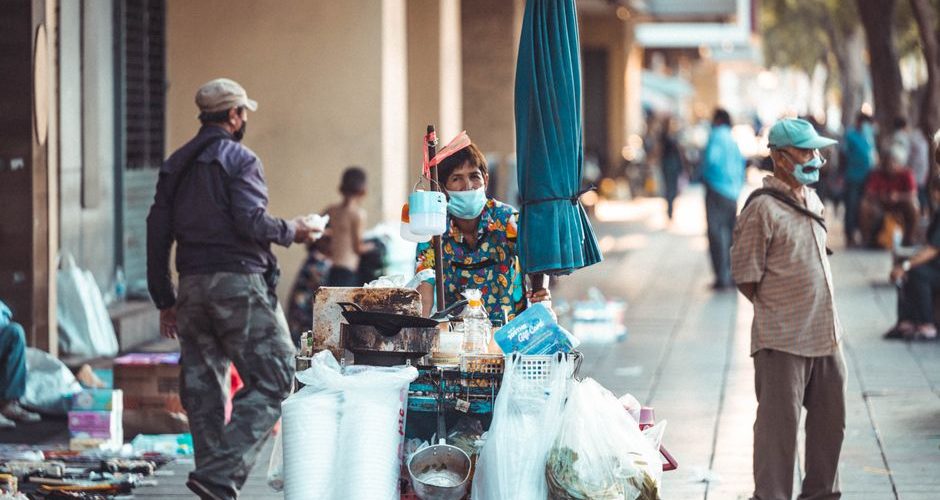
Most first-timers think the best Bangkok street food is on Khao San Road. It is not. Khao San is where pad thai costs 120 baht and tastes like sweet ketchup. The real markets are where Thai office workers eat lunch for 50 baht and nobody speaks English. That is where you should be.
This guide covers four markets, what to order, what to pay, and the one mistake that sends tourists to the bathroom for two days. No affiliate links. Just field notes from multiple trips and conversations with stall owners who have been cooking for 30 years.
The 50-Baht Lunch Rule: How to Spot a Tourist-Trap Stall
Thai street food pricing follows a simple pattern. If a stall has a laminated menu with photos and English translations, prices are 40-60% higher than a stall with a handwritten Thai sign. The food is rarely better. The laminated menu exists to remove negotiation anxiety from tourists who cannot read Thai. You pay for that comfort.
The 50-baht lunch rule: a standard plate of noodles, rice with meat, or curry should cost 50-70 baht at a local market stall. If you see 100+ baht for pad thai, walk. The exception is seafood, which is priced by weight and can legitimately run 200-400 baht for a whole grilled fish.
What to look for instead
Look for stalls with a queue of Thai office workers at 12:30pm. That queue is the only review you need. Thai workers eat street food daily. They will not tolerate bad food or unsafe food. A stall that survives in a local market has passed a quality audit far stricter than any travel blog.
The condiment tray test
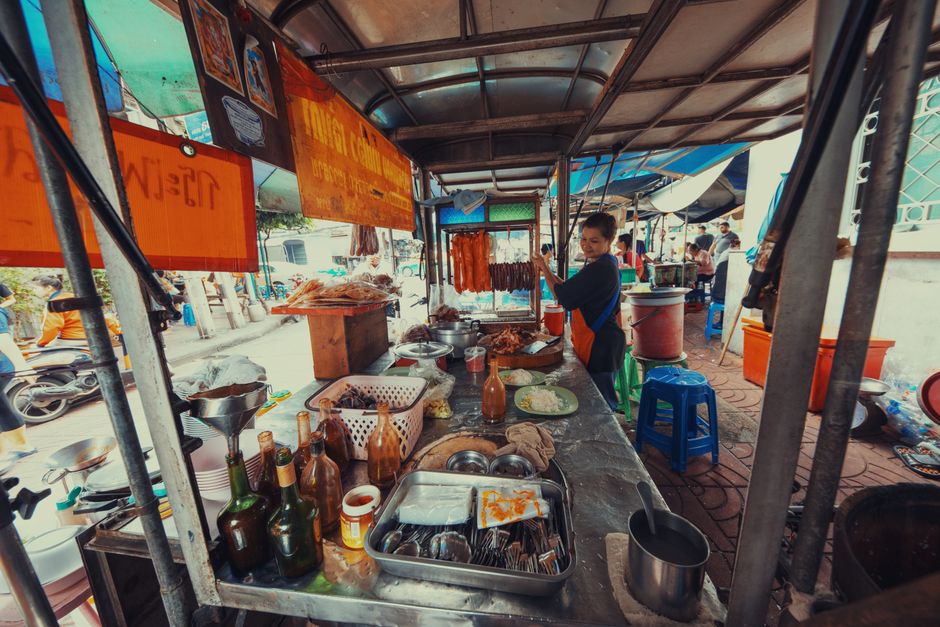
Every proper Thai street food stall has four condiments: dried chili flakes, fish sauce with chilies, sugar, and vinegar with chilies. If the tray is missing or the chilies look old and dark, the stall is cutting corners. Fresh condiments means the cook cares about the full dish, not just the main ingredient.
Yaowarat Road at Night: The Chinatown Gauntlet
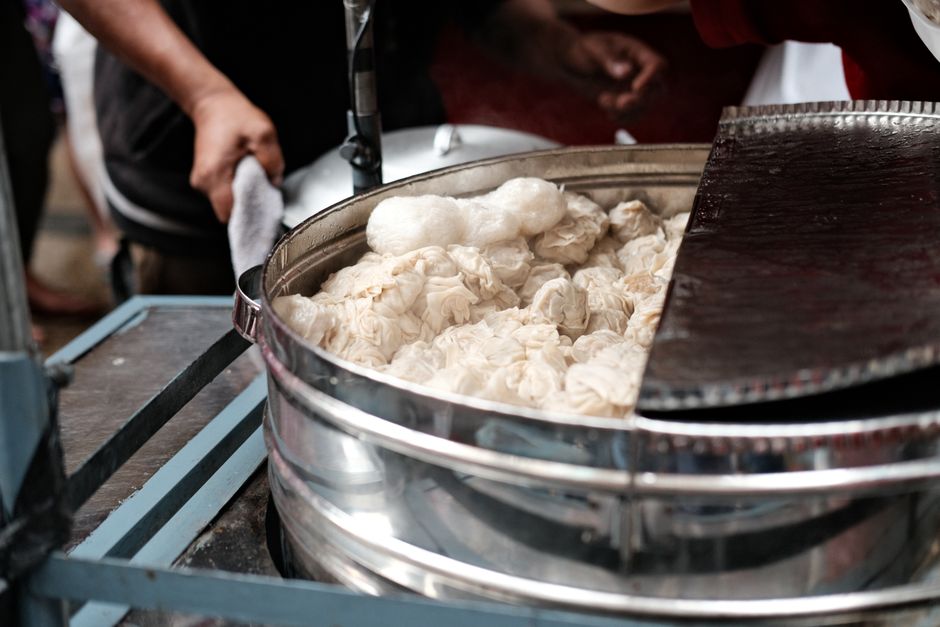
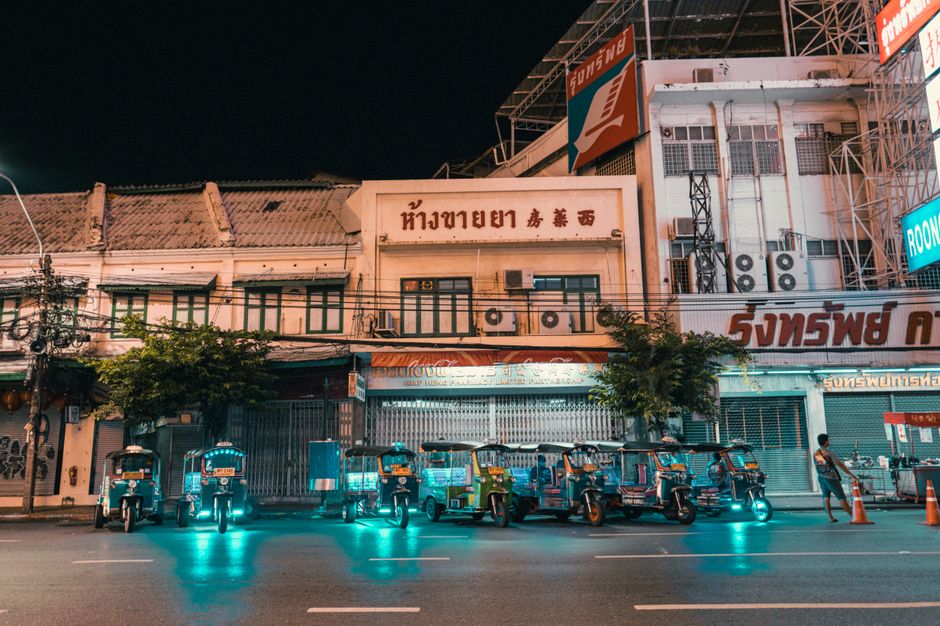
Yaowarat Road transforms after 6pm. Traffic slows to a crawl, neon signs flicker on, and the sidewalk disappears under plastic stools and woks. This is Bangkok’s most intense street food experience. It is also the easiest place to overpay and eat mediocre food if you stop at the first famous-looking stall.
The move is to walk the full length of Yaowarat first. Do not eat for the first 20 minutes. Just observe. The stalls with the longest Thai-Chinese family queues are your targets. The stalls with touts shouting “best pad thai in Bangkok” are not.
The specific stalls worth finding
Nai Ek Roll Noodle serves guay jub — rolled rice noodles in peppery pork broth — for 60-80 baht. It has a Michelin Bib Gourmand listing and the queue moves fast. Guay jub is the dish most tourists skip because they do not recognize it. That is a mistake. The broth is dark, peppery, and deeply porky. It is better than any pad thai you will eat in Bangkok.
For dessert, find the mango sticky rice stall near the Grand China Hotel intersection. Mango sticky rice in Yaowarat runs 80-120 baht depending on mango season. April and May are peak mango months. Outside that window, the mango is imported and not worth the price.
A quick Yaowarat pricing reality check
| Dish | Tourist stall price | Local stall price | Worth it? |
|---|---|---|---|
| Pad thai with shrimp | 120-150 baht | 60-80 baht | Only at local stalls |
| Guay jub (rolled noodles) | 100 baht | 60 baht | Yes, always |
| Grilled river prawns | 500+ baht | 300-400 baht | Only if you see them alive first |
| Mango sticky rice | 150 baht | 80-100 baht | Yes, in mango season |
| Oyster omelette | 120 baht | 70-90 baht | Yes, at Nai Mong Hoi Thod |
Or Tor Kor Market: The Clean, Expensive Contrarian Pick
Or Tor Kor is the market that contradicts everything I just said about laminated menus and tourist pricing. It is clean, organized, and more expensive than street stalls. A plate of food here runs 100-200 baht. But the quality is genuinely higher for specific items.
This is where you go for fruit. Or Tor Kor has the best mangoes, durian, and mangosteen in Bangkok, displayed like jewelry. The durian vendors will let you taste before buying, which is rare. A whole durian here runs 300-600 baht depending on variety. Monthong is the safe choice. Kan Yao is the premium choice if you want to spend more.
Skip the cooked food at Or Tor Kor unless you specifically want air-conditioned seating. The fruit is the reason to come. The cooked dishes are good but not better than street stalls charging half the price.
Wang Lang Market: The Riverside Morning Move
Wang Lang Market sits across the river from the Grand Palace, next to Siriraj Hospital. It opens early and peaks before noon. This is a working market for nurses, doctors, and locals. Almost zero tourists. Almost no English. Bring cash and point at what looks good.
The market is a maze of narrow alleys. You will get lost. That is the point. Every turn reveals another stall selling something you have never seen. The strategy here is simple: eat small portions from many stalls. Do not commit to a full meal at the first stall.
Two specific stalls to find
The fried chicken stall near the river entrance sells gai tod for 20-30 baht per piece. It is crispy, garlicky, and better than any fried chicken you have had. The vendor has been frying in the same wok for over 20 years.
The kanom krok stall — coconut custard pancakes cooked in a cast iron mold — sells six pieces for 30 baht. Eat them immediately. They are only good for the first three minutes out of the pan.
Chatuchak Weekend Market: The Food Section Strategy
Chatuchak is famous for shopping, not food. Most of the food stalls near the main entrance are mediocre and overpriced. But there is a specific food section worth targeting: the area around Section 23 and the clock tower. That is where you find coconut ice cream served in a coconut shell for 50 baht, grilled squid for 80 baht, and the best som tam (papaya salad) in the market.
The som tam stall near the clock tower makes it properly — mortar and pestle, fermented fish sauce, dried shrimp, and a spice level that will make you sweat. Tell them “mai phet” if you cannot handle heat. Tell them “phet mak” if you want to prove something. You will regret “phet mak.”
When not to eat at Chatuchak
If you visit Chatuchak between 2pm and 4pm on a hot Saturday, skip the food entirely. The market becomes an oven, the stalls have been sitting in the heat for hours, and the food quality drops. Eat before you arrive or after you leave. The market itself is worth visiting for the chaos, but the food is only worth it in the morning or early evening.
The One Mistake That Ruins a Bangkok Food Trip
Ice. Tourists obsess over ice in Thailand. They think ice is unsafe. The truth is the opposite: ice in Bangkok is made in commercial ice factories and is safe to consume. The danger is not ice. The danger is raw vegetables washed in tap water.
Som tam, the papaya salad, is made with raw papaya, raw green beans, and raw tomatoes. If the stall washes those vegetables in tap water, you are eating bacteria that your stomach has never met. Local stalls that serve Thai customers daily have a self-interest in not poisoning their regulars. The risk is higher at tourist-oriented stalls with low repeat business.
Practical rule: eat som tam at stalls with a queue of Thai customers. Avoid it at empty tourist restaurants. And if you are genuinely worried, order som tam “mai phet” and ask for it without the raw green beans. The papaya itself is peeled and shredded fresh, which reduces the risk.
The Verdict: One Day, Four Markets, Zero Regrets
If you have one day to eat street food in Bangkok, here is the compressed plan. Morning: Wang Lang Market for fried chicken and kanom krok. Midday: Or Tor Kor for fruit and air-conditioned relief. Evening: Yaowarat Road for guay jub and oyster omelette. Skip Chatuchak food unless it is a weekend morning and you are already there for shopping.
For first-timers, Yaowarat Road at night is the single best introduction to Bangkok street food. It is intense but manageable, the queues tell you where to eat, and the dishes are accessible. Start there. Build confidence. Then go deeper into the local markets on your second day.
Final comparison for the four markets:
- Yaowarat Road — Best overall first-timer experience. Crowded, chaotic, but the queues guide you to the right stalls. Go after 6pm.
- Wang Lang Market — Best for adventurous eaters who want zero tourists and authentic local pricing. Go before 11am.
- Or Tor Kor — Best for fruit and a clean, comfortable market experience. Not the place for cheap cooked food.
- Chatuchak — Best only if you are already shopping there. The food section near the clock tower is good, but not worth a dedicated trip.