Traveling Croatia with a dog
02/27/2023
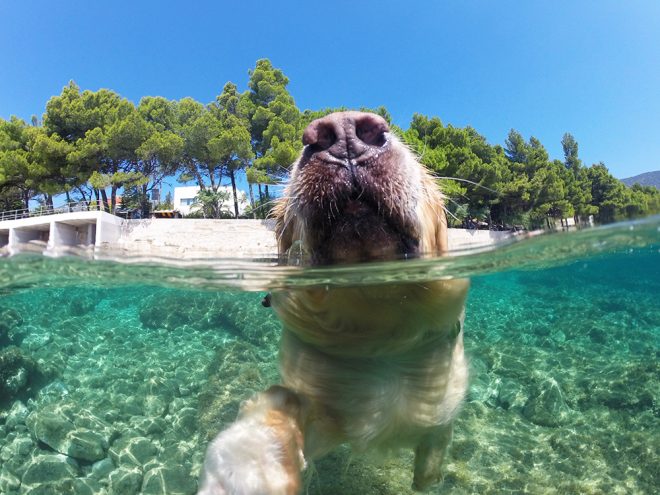
Croatia has over 1,700 islands, but dogs are banned from most of its famous beaches between June and September. If you’ve spent time searching for “dog-friendly Croatia” and come away with vague reassurances, this guide covers the parts that actually require planning: the documents, the regional differences, the national park situation, and the heat.
The Entry Requirements That Catch Most Travelers Off Guard
Croatia joined the EU in 2013, which means standard EU pet travel rules apply. But the specifics trip people up, especially around vaccination timing and microchip standards.
EU Pet Passport and Microchip Compatibility
Every dog entering Croatia from another EU country needs an EU pet passport — the small blue booklet your vet issues. It records your dog’s microchip number, rabies vaccination history, and your contact details.
The microchip must comply with ISO standards 11784 and 11785 — a 15-digit chip. Older 9-digit chips, common in dogs chipped before 2011, may not register on standard border scanners. Have your vet confirm compatibility before you travel. Border officers at Croatian land crossings do check, particularly at the main entries from Slovenia at Gruškovje and from Hungary at Goričan.
This sounds bureaucratic until it isn’t. A friend drove 14 hours from Germany to discover her dog’s decade-old chip wasn’t reading on the border scanner. They got through, eventually, but only after 45 minutes and a supervisor call. Don’t skip the chip check.
Rabies Vaccination: The Timing Problem
This is where most people run into actual trouble. Croatia requires a valid rabies vaccination, and the rules depend on which vaccination it is:
- First-time vaccination: must be administered at least 21 days before entering Croatia
- Booster shot after a lapse in coverage: treated as a first vaccination — the 21-day wait applies again
- Regular booster with no lapse: valid from the date of administration
If your dog’s booster lapsed and you just got them re-vaccinated two weeks before departure, you cannot legally cross the border with that dog. Check the exact dates in your EU pet passport well before booking anything. Annual boosters are the most common source of this problem — owners who pushed the appointment back a month.
Traveling from the UK
Post-Brexit, UK travelers need an Animal Health Certificate (AHC) instead of an EU pet passport. The AHC must be issued by an Official Veterinarian — a vet registered with APHA, not your regular practice unless they hold that specific accreditation. It costs around £150–200 depending on the practice and must be issued within 10 days of travel.
On the return to the UK, your dog needs a tapeworm treatment (praziquantel) administered by a vet within 24 to 120 hours before crossing back. This is a UK border requirement, not Croatia’s, but it means finding a Croatian vet before you leave. Most veterinarska ambulanta clinics in tourist areas can do this in a single appointment — ask your accommodation to point you to the nearest one.
Croatian Beaches and Dogs: The Real Picture
The short version: Dalmatia is difficult, Istria is more forgiving. Croatia’s bathing rules let municipalities ban animals from designated swimming areas, and most popular beaches enforce this from June to September. Here’s how the main coastal regions break down:
| Beach | Region | Dogs Allowed | Notes |
|---|---|---|---|
| Bačvice | Split | No (Jun–Sep) | Famous picigin beach, heavy enforcement in summer |
| Pineta Beach (Poreč) | Istria | Yes (designated area) | Most established dog-friendly beach in Istria |
| Havišće (near Poreč) | Istria | Yes (year-round) | Small, pebbly, calm water — low crowds |
| Punta Križa | Cres Island | Yes | Remote and rocky; accessible by ferry to Cres |
| Trsteno | Dubrovnik area | No | Tourist congestion, dogs banned on beach and promenade |
| Lokva Rogoznica | Šibenik area | Seasonal — verify locally | Quieter than Split; some stretches tolerate dogs |
Croatian municipalities update their beach rules each spring. The rules appear on regional tourist board websites — visitistria.hr and dalmatia.hr both post seasonal pet restrictions. What applied in 2026 can change in 2026, so call the local tourist office or email ahead rather than assuming last year’s reports are still accurate.
One practical workaround: rocky coves (uvale) are a better bet than sandy beaches. Many aren’t formally designated as swimming areas and don’t fall under the same restrictions. Exploring coastline by kayak or paddleboard opens up dozens of small coves that are effectively off the radar — no signage, no enforcement, no crowds.
National Parks: Mostly Off-Limits
Plitvice Lakes does not allow dogs inside the park. Neither does Krka on the boardwalk sections near Skradinski Buk. These are Croatia’s two most visited natural sites. There are kennels at the Plitvice entrance if you want to go in without your dog, but if your dog is the main travel partner, plan around these parks, not through them. Paklenica National Park in the Velebit mountains is the exception — dogs on leads are welcome on the hiking trails, and the terrain is excellent for active breeds.
Getting to Croatia with a Dog
Can you fly to Croatia with a dog?
Yes, with conditions. Most major airports (Split, Dubrovnik, Zagreb) are served by airlines that accept small dogs in the cabin — typically under 8kg including the carrier. Croatia Airlines and Lufthansa both have clear in-cabin pet policies. Ryanair does not allow any pets in the cabin. All dogs fly cargo with Ryanair, which many owners prefer to avoid entirely.
For larger dogs, cargo is the main option on any airline. This works fine for healthy adult dogs on direct flights but carries more risk for anxious animals or brachycephalic breeds like bulldogs and French bulldogs — several carriers refuse these breeds in cargo due to documented breathing complications in pressurized holds. Check each airline’s breed exclusion list before booking anything.
Are ferries from Italy a better option?
Jadrolinija and SNAV both operate ferry routes from Ancona and Venice to Croatian ports. Dogs are allowed on board. On Jadrolinija overnight ferries, you can book a private cabin and keep your dog with you — significantly less stressful than a pet deck in mixed weather for six hours. Book early. Pet spaces on summer routes fill up weeks in advance, and this isn’t the kind of thing where last-minute availability exists.
Is driving the most flexible option?
For most people with medium-to-large dogs, yes. You carry everything your dog needs, stop whenever required, and avoid the stress and expense of cargo travel. The main land entries are Gruškovje (Slovenia) and Goričan (Hungary). Keep your pet passport with your car documents in the glovebox — document checks are routine at Croatian crossings, not exceptional. The drive from the UK to Istria runs 18–20 hours total; most people break it with a night in Austria or Slovenia.
Where to Base Yourself with a Dog in Croatia
Istria is the right answer for most dog owners, and it’s not close. The northwestern peninsula has a culture — shaped by centuries of Italian and Austro-Hungarian influence — that treats dogs in public spaces differently than the rest of Croatia. Restaurant terraces in Rovinj and Poreč welcome dogs without a second look. The interior hill towns of Motovun, Grožnjan, and Oprtalj have walking trails through truffle forests, and the agriturismo accommodation in the countryside is generally open to dogs of any size.
Compare that to Dubrovnik, where the Old Town is a maze of stone steps and tourist congestion. The Stradun pedestrian area in July is so packed that walking a dog through it is uncomfortable for the animal and everyone around it. Dubrovnik is worth a day trip from somewhere quieter — not a base for a dog-focused holiday.
For Dalmatia, Šibenik makes more sense than Split or Dubrovnik as a base. It’s smaller, less chaotic, and well-positioned for day trips to Krka, the Kornati islands, and the quieter beaches north of the city. Trogir — 30 minutes from Split — is another solid compromise: UNESCO Old Town, manageable crowds, and more affordable accommodation than Split itself.
For booking, Booking.com’s “pets allowed” filter is a starting point, not a final answer. In Croatia, “pets allowed” sometimes means one cat under 5kg. Message hosts directly before confirming. Airbnb tends to have more detailed house rules, and hosts usually respond quickly to specific questions about dog size and breed.
The Time of Year That Changes Everything
Peak summer in Dalmatia (July–August) regularly hits 33–36°C. Ground temperatures on stone and concrete can exceed 60°C — enough to burn paw pads in under a minute. The pavement test: if you can’t hold your palm flat on the ground for five seconds, it’s too hot for your dog to walk on.
The realistic windows for a comfortable trip:
- May–June: The best overall window. Beaches are quiet, dogs welcome almost everywhere, temperatures stay below 28°C, facilities fully open. Water is cool but dogs rarely care.
- September: Strong second choice. Sea temperature peaks in September from summer carry-over. Crowds thin noticeably after the first week. Prices drop 20–30% from August highs.
- October: Istria is excellent here — truffle season starts, the interior is green and walkable, coastal facilities stay open until mid-month. Best for hiking-focused trips.
- July–August: Doable with discipline. Early morning walks only (before 9am), full rest during midday heat, short evening walks after 7pm. Never leave a dog in a parked car — Croatian law prohibits it, and interior car temperatures hit dangerous levels within minutes even with windows cracked.
Ticks are active from March through November across Croatia. Bravecto (fluralaner, single oral dose, 12 weeks of protection), Nexgard Spectra, or Frontline Tri-Act applied before departure. This is not optional. Croatia has active Dermacentor tick populations in forested areas, and canine babesiosis — transmitted by tick bite — can be fatal within 48 hours if untreated. Symptoms include sudden lethargy, loss of appetite, and dark or red-tinged urine. If your dog shows any combination of these after a tick exposure in Croatia, get to a vet the same day.
What Your Dog Actually Needs in the Croatian Heat
Water on the go
Croatia’s tap water is safe and among the best quality in Europe. But a dog in 30°C heat drinks two to three times its usual volume. Carry a collapsible silicone bowl on every outing — the Ruffwear Quencher (around €12–15) compresses flat in a back pocket. Don’t assume you’ll find a tap mid-hike on the islands. Plan water stops into every route.
Cooling gear that actually works
A Ruffwear Swamp Cooler vest (€65–75 in European pet stores or on Amazon.de) works by evaporative cooling — soak it in water and it lowers your dog’s surface temperature for 60–90 minutes before needing a refresh. For dogs with dark coats or breeds that struggle in heat, this makes a measurable difference in shoulder-season temperatures. In Dalmatia in July, it’s close to essential.
Documentation and vet access
Keep a physical folder with your EU pet passport or AHC, vaccination records, pet insurance documents, and your home vet’s contact details. Croatian vet clinics (veterinarska ambulanta) near the coast generally speak workable English and are well-equipped. But in an emergency, having your insurance policy number and your dog’s health history already in hand saves time that matters.
One thing to verify before departure: whether your pet insurance policy covers Croatia specifically. Most EU and UK policies include EU member states, but the claims process for treatment abroad varies. Some Croatian clinics require full payment upfront — confirm your insurer’s reimbursement process before you need it.